Drilling. The kick before the pit.
Influx and loss rate estimated from the channels every rig already records, ranked against their look-alikes: ballooning, connections, pump ramps, sensor faults. Built and scored in simulation against flow-back fingerprinting and a lumped observer; the results stay here. Advisory only. A person decides.
Seven products. One engine.
Read. Estimate. Rehearse.
Read
The surface channels and the rig state.
ModeEstimate
Influx and loss with an interval, against the look-alikes.
Gain · Balloon · Limit · CheckRehearse
Drills and the sequence. The driller acts.
Rehearse · SequenceBoundary observers on the drillstring–annulus U-tube; unknown-input estimation by a signature bank and constrained moving-horizon least squares
Same engine family as Wavepin, moved from the pipe to the annulus.
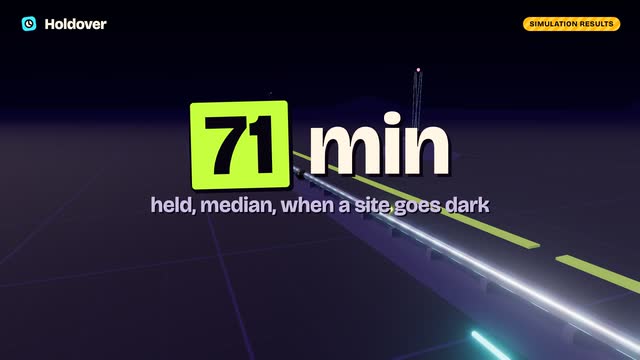
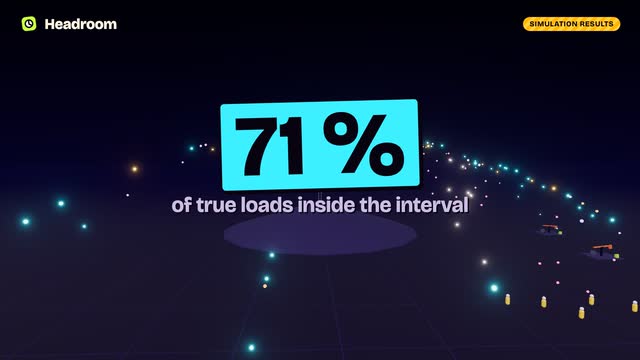
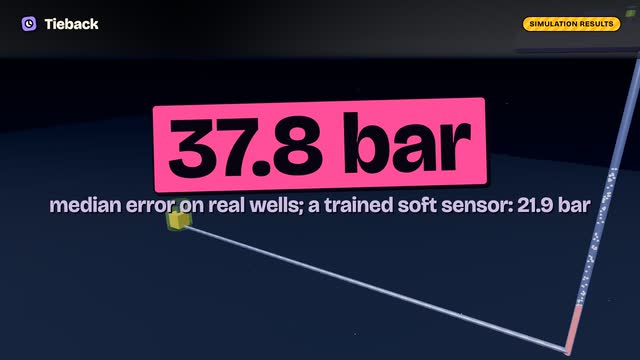
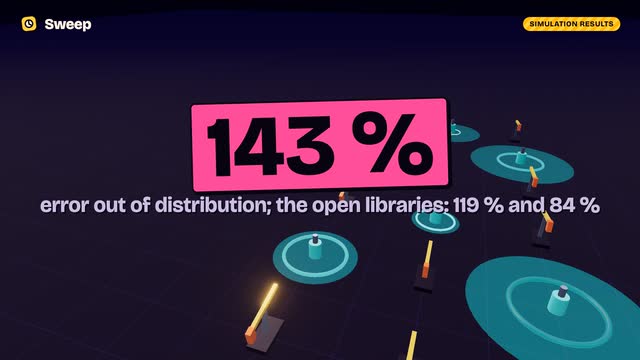
Tournament t001, 1500 held-out simulated two-hour drilling runs (557 with influx) on a 3,000 m well, alarm thresholds frozen at 2 % false flow checks per run on validation; ballooning never seen in training. The bar and the result are on the proof page. All the numbers →
The whole story in 82 seconds
Built for the assets you run
Offshore floaters
Subsea BOP, heave.
Jack-ups
Shallow water, conventional returns.
Onshore pads
Conventional rigs, no MPD.
HPHT and geothermal
Narrow windows.
Drilling contractors
One method across the fleet.
The results stay public.
Every number, against flow-back fingerprinting and the lumped observer, and the ledger are on the proof page.